




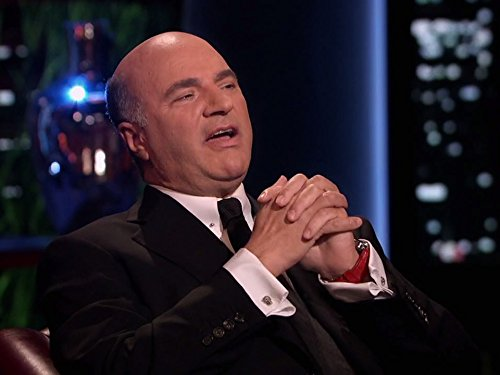
Kevin O’Leary has spent much of his public career reducing business ideas to a blunt question: will the investment make money? In 2026, he is applying that instinct to a project far larger and more complicated than the consumer brands normally associated with Shark Tank. Through O’Leary Digital, he has become one of the most visible backers of Stratos, a proposed hyperscale data-center and energy campus in northern Utah. The project has placed him at the center of the national argument over how much land, power and public trust the artificial-intelligence boom will require.
Stratos was introduced with extraordinary numbers. The original concept covered roughly 40,000 acres in Box Elder County and envisioned a campus that could eventually require as much as nine gigawatts of power. That is more electricity than the entire state typically uses at a given moment. To avoid waiting years for new grid connections, the developers proposed generating power on site, using natural gas available through a nearby pipeline. Supporters presented the plan as a way for the United States to build AI capacity quickly and compete with China.
The scale also produced immediate resistance. Residents, environmental advocates and researchers raised questions about emissions, water consumption, noise, tax incentives and the effect of such a large industrial development on rural communities. Even though the developers said the site would rely on closed-loop cooling and off-grid power, many local people felt that the public presentation came before the details. The debate became a lesson in the difference between winning regulatory momentum and earning community consent.
O’Leary initially defended the proposal in the combative style familiar to television viewers. He argued that modern data centers are misunderstood and that AI infrastructure is a strategic necessity. But as opposition grew, his position became more conciliatory. Utah lawmakers called for a major reduction in the project’s footprint and additional environmental safeguards. O’Leary agreed that the plan would shrink and, in an August interview, acknowledged that his team had mishandled communication with residents.
That admission was significant because it cut against his usual public persona. O’Leary said the developers needed to be more transparent and proposed showing the impacts of an initial one-gigawatt facility – heat, noise and water use – so that the public could better evaluate what a larger campus might mean. The final size and development sequence remain unsettled, but the shift suggests that Stratos is moving from a grand announcement into the slower work of engineering, permitting and negotiation.
The project reflects a broader change in O’Leary’s investment story. For years, he has been best known for software, licensing, funds and the small businesses he evaluates on television. AI data centers are different. They require long timelines, enormous capital, complex energy arrangements and cooperation with governments. Returns depend not only on customer demand, but on land rights, construction, transmission, environmental performance and political durability.
Related News


O’Leary argues that demand is the least uncertain part. Companies training and operating large AI models need computing power, and traditional grids often cannot provide it quickly enough. His thesis is that energy-secure campuses will become some of the most valuable infrastructure of the next decade. The risk is that today’s projections may outrun confirmed tenants, financing or the public’s tolerance for industrial expansion. Stratos has not announced the kind of anchor customer that would turn its full vision into an inevitability.
AI is also becoming part of O’Leary’s own media operation. In 2026 he discussed training a digital version of himself, sometimes described as “AI Kevin,” using recordings designed to reproduce his voice, expressions and manner. He treated the experiment as a productivity tool while insisting that artificial systems still struggle with genuine spontaneity and creativity. The project suits his brand: it is both a demonstration of enthusiasm for AI and another way to keep his personality operating across more content.
His traditional public work continues. O’Leary remains associated with Shark Tank, speaks frequently about entrepreneurship, markets and technology, and maintains a pipeline of branded appearances. The University of Southern Indiana has scheduled him for a September event focused on AI and wealth creation. Such appearances reinforce the connection he is trying to make between his familiar investing advice and the larger infrastructure opportunity he now promotes.
There is an irony in that transition. On Shark Tank, O’Leary often criticizes founders who pursue scale before proving the basics. Stratos has been criticized for appearing to do exactly that: announcing a nine-gigawatt vision before many residents understood the first phase. His willingness to revise the footprint and acknowledge poor messaging may therefore be the most important business development of the year. It shows an investor confronting the social constraints that do not appear on a simple earnings spreadsheet.
Related News



Kevin O’Leary remains a polarizing messenger. His certainty attracts attention, but it can also make legitimate questions sound like obstacles to be dismissed. In 2026, the success of his biggest current bet will depend on a skill less dramatic than television negotiation: listening. If Stratos advances, it could become a major piece of American AI infrastructure. If it stalls, it will stand as a warning that even limitless technological demand does not erase local politics, environmental responsibility or the need to explain a project before asking a community to live beside it.
Sources consulted
foxbusiness.com – Kevin Oleary Says Utah Ai Data Center Project Shrink Lawmakers Demand Cuts
businessinsider.com – Kevin Oleary Utah Data Center Messed Up Messaging 2026 8
usi.edu – Usi to Host Shark Tank S Kevin O Leary Mr Wonderful