




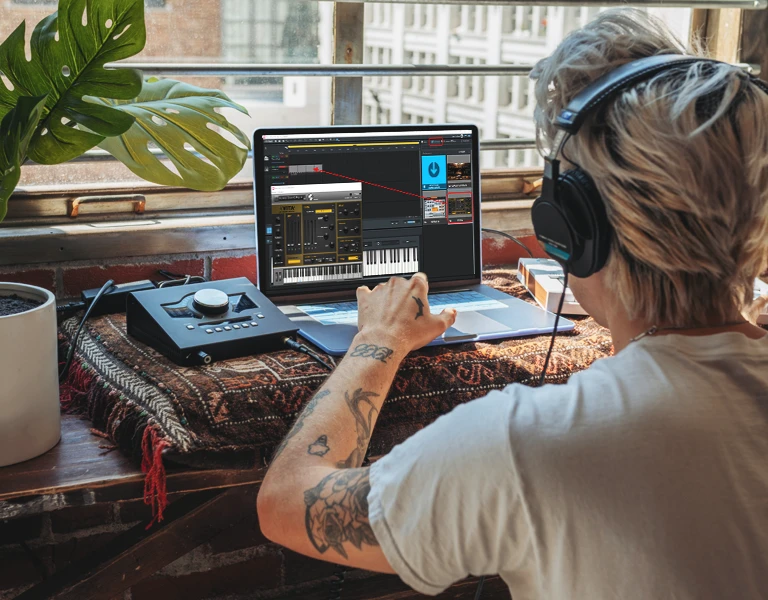
A custom beat is only as good as the brief behind it. Producers who take custom orders will tell you the same thing: the difference between a smooth, one-revision project and a frustrating back-and-forth that ends in a refund is almost always the quality of the very first message. If you are an artist commissioning a custom beat, learning how to write a proper request will get you a better beat, faster, and often at a better price — because a clear brief is less risky for the producer to quote. This guide is the request template that makes a producer understand the job from message one.
Lead with the reference
The fastest way to communicate the sound in your head is to point at sounds that already exist. Name two or three reference tracks and say specifically what you want from each — “the drum bounce of this one, the dark piano mood of that one, the tempo of the third.” References collapse a paragraph of vague adjectives into an instantly understood target. “Make it hard and vibey” means nothing; “I want it to feel like [song A]’s energy with [song B]’s melody style” means everything. Producers work from references constantly, and a request built around two or three good ones is halfway to a great beat before any keys are pressed.
Specify the technical parameters
After the vibe, give the producer the concrete numbers they need to actually build the track. The essentials are tempo (a BPM or a rough range — “around 140” is fine if you’re unsure), key or mood if you have a preference, and the genre or subgenre so there’s no ambiguity between, say, trap and drill. If you already have a vocal idea, mention the song structure you need — how many verses, whether you want a distinct hook section, roughly how long the beat should be, and where you want energy to rise and fall. If you’re rapping or singing to it, telling the producer your vocal range or sending a rough voice memo of your flow helps them leave the right space in the arrangement. None of this has to be technical jargon; even “I rap kind of fast and low, around 140 BPM, dark vibe, need a clear hook part” tells a producer almost everything.
State the deliverables and the commercial terms up front
This is where most requests fall apart, and where stating things early saves everyone grief. Say what you actually need delivered: an MP3, a WAV, or full trackout stems for mixing. Say whether you need exclusive rights (you’re the only one who will ever use it) or a lease is fine — this dramatically affects the price. Be honest about your budget range; producers would far rather know you have $300 or $3,000 up front than discover it after making the beat, and a stated budget lets them tell you immediately whether they can do it. And clarify the timeline: when do you need it, and is there room for revisions? Custom work commonly runs anywhere from a few hundred dollars for emerging producers to $1,500–$10,000 for established ones, so aligning on price, rights, and deadline before work begins is not rude — it is exactly what a professional producer wants.
The one-message template
Put together, a request that a producer can act on immediately looks like this: “Hi — I’m working on a [genre] track and I love your sound. I’m going for something like [reference 1] meets [reference 2], around [BPM], [mood/key]. I need [MP3 / WAV / trackout stems], [exclusive / lease], with a clear hook section and room for two verses. My budget is around [$X] and I’d need it by [date]. Are you open for custom work, and does that work on your end?” That single message answers every question a producer would otherwise have to ask, which is why it gets a fast, confident quote — and a better beat. Vague requests get vague beats and slow replies. Specific requests get taken seriously.
The checklist: everything a good brief contains
If you want a reference you can copy before sending any custom request, make sure your message covers these points. Reference tracks (two or three, with what you want from each). Genre and subgenre. Tempo (BPM or a range). Key or mood, if you have a preference. Song structure (verses, hook, bridge, rough length, energy changes). Vocal information (your range, style, or a voice memo of your flow). Deliverables (MP3, WAV, or trackout stems). Rights (exclusive or lease). Budget (an honest number or range). Deadline (and whether revisions are expected). Any hard requirements (a specific sample to flip, an instrument you must have, a tempo you can’t move off). A brief that hits these points leaves almost nothing for the producer to guess, and guessing is where custom projects go wrong. You don’t need to write an essay — a tight message covering these is enough, and it instantly signals that you’re a serious, easy client to work with.
Related News

Why a vague brief costs you money and time
It’s tempting to think a loose brief gives the producer creative freedom, but in practice vagueness is expensive for everyone. When a producer doesn’t know your tempo, references, or deliverables, one of two things happens: they either pepper you with questions (slowing everything down) or they guess (and often guess wrong, leading to revisions or a beat you can’t use). Every wrong guess is a round of back-and-forth, and every round costs days. Worse, a producer quoting a vague request has to price in the risk of misunderstanding — the possibility they’ll have to redo the work — so vague briefs often get higher, more defensive quotes, or get declined outright by busy producers who don’t want the headache. A precise brief de-risks the project for the producer, which is exactly why it earns you faster replies, better prices, and fewer revisions. Clarity is not just courtesy; it’s leverage.
Talking about budget without underselling yourself or overpaying
Artists often freeze up on the budget question, worried they’ll either sound cheap or get overcharged. The honest move is to state a real range and let the producer respond. Producers price custom work across a wide spectrum — emerging producers may charge a few hundred dollars, while established ones command $1,500 to $10,000 or more — so telling them “my budget is around $400” or “I can go up to $2,000 for the right beat” instantly filters for producers in your range and saves everyone time. If your budget is genuinely small, say so; plenty of hungry, talented up-and-coming producers do excellent custom work at accessible prices and would rather know your number than waste time. If your budget is large, stating it signals you’re a serious client and often gets you priority and extra care. The one thing that doesn’t work is hiding the budget entirely and hoping — that just leads to a quote mismatch and an awkward negotiation after the fact.
Etiquette that gets you treated like a priority client
Beyond the technical brief, a few habits mark you as the kind of client producers want to keep. Be responsive — if the producer asks a clarifying question, answer promptly, because a stalled conversation stalls your beat. Be reasonable about revisions — agree up front on how many are included, and keep your feedback specific (“the hi-hats are too busy in the hook”) rather than vague (“something feels off”). Pay on the agreed terms and on time. Credit the producer publicly when the song comes out, and tag them — producers remember artists who hype them, and those artists get better rates and faster turnarounds next time. Treating the relationship as a two-way professional partnership rather than a one-off transaction is what turns a single custom order into an ongoing collaboration, where the producer knows your sound, your preferences, and your flow, and can deliver better work faster with each project. The first great brief gets you a great beat; consistent good-client behavior gets you a producer who’s genuinely invested in your music.
Key takeaways
- Lead with two or three reference tracks and say what you want from each — references communicate a sound instantly, where vague adjectives (“hard and vibey”) communicate nothing.
- Include the technical essentials: tempo/BPM, key or mood, genre, song structure (verses, hook, length), and your vocal style or a rough voice memo so the producer leaves the right space.
- State deliverables (MP3/WAV/stems), rights (exclusive vs lease), an honest budget range, and a deadline up front — this de-risks the project for the producer and gets you a faster, better quote.
- A precise brief and good-client etiquette (prompt replies, specific feedback, on-time payment, public credit) get you priority treatment and turn a single custom order into an ongoing collaboration.